Zirconia Implants in 2025: What the Latest Research Actually Tells Us
New 2025 publications show promising outcomes for zirconia implants, but survival rates vary significantly based on design, surgical technique, and loading protocols—making proper case selection more important than ever.
Research your audience thoroughly to adapt content
Venenatis sollicitudin posuere elit consequat et enim. Neque tortor amet dictum tempor. Leo facilisis aliquet viverra scelerisque eleifend viverra est. At massa erat vel amet enim laoreet dictum pellentesque. Urna cursus quam pulvinar tellus. Duis fermentum nibh volutpat morbi. Et ac sed ultricies ut nunc sodales lectus. Ultricies pharetra mauris eget pellentesque accumsan tincidunt. Orci hendrerit cursus est.
Set a clear objective for your presentation
Et urna ac et maecenas fusce amet. Nibh nec commodo massa sed. Tincidunt porttitor in pharetra egestas sit neque ac lacus. Amet a nunc et cum. Odio at volutpat volutpat in leo eget ipsum diam elementum. Erat magna arcu orci lorem senectus orci fringilla. Tincidunt metus nisl vitae maecenas pretium aliquet. At id pharetra in vestibulum lectus pellentesque venenatis molestie. Nibh ut facilisis.
- Morbi fringilla molestie magna sed dictum. Praesent pharetra turpis augue.
- Cras mi purus, viverra vitae felis sit amet, tincidunt fringilla lorem.
- non mattis urna ex nec sem. Donec varius diam et suscipit venenati proin tincidunt
- Quisque euismod posuere lacus sit amet volutpat. Praesent vel imperdiet

Avoid filling slides with text
Cursus curabitur euismod vel fermentum sapien non dolor odio vel. Tortor lectus mauris in praesent a tincidunt nam. In aenean odio aliquet pretium viverra elit quis magna. Eget ut risus posuere velit purus nisi nec sollicitudin. Tellus enim interdum neque sit vestibulum lacus. Nam pulvinar a lectus justo aliquet integer amet.
“Sed id mi eget urna facilisis pharetra. Nunc viverra est at magna maximus consectetur. Sed nec maximus augue. Aliquam commodo sem eu nisl efficitur venenatis. Proin eu suscipit lorem. Nam vitae aliquet augue. Morbi rutrum ultrices lorem molestie suscipit. Sed mattis luctus odio eu porta.”
Practice your speech so that it flows naturally and maintains an appropriate rhythm
Sed non quis tellus velit orci. Quam sed mauris elementum tempor viverra. Luctus semper risus ipsum id diam praesent. Pretium eget mauris ultrices curabitur sed sem amet. Erat nulla habitant in mattis massa mi adipiscing ullamcorper condimentum. Erat quisque integer tincidunt ac amet tempor vulputate tristique. Venenatis neque odio a nulla iaculis euismod etiam.
- Morbi fringilla molestie magna sed dictum. Praesent pharetra turpis augue.
- Cras mi purus, viverra vitae felis sit amet, tincidunt fringilla lorem.
- non mattis urna ex nec sem. Donec varius diam et suscipit venenati proin tincidunt
- Quisque euismod posuere lacus sit amet volutpat. Praesent vel imperdiet
Integrate videos, animations or visual demonstrations to make the presentation more dynamic
Sed non quis tellus velit orci. Quam sed mauris elementum tempor viverra. Luctus semper risus ipsum id diam praesent. Pretium eget mauris ultrices curabitur sed sem amet. Erat nulla habitant in mattis massa mi adipiscing ullamcorper condimentum. Erat quisque integer tincidunt ac amet tempor vulputate tristique. Venenatis neque odio a nulla iaculis euismod etiam.
Simplify complex concepts so everyone can understand
Sed non quis tellus velit orci. Quam sed mauris elementum tempor viverra. Luctus semper risus ipsum id diam praesent. Pretium eget mauris ultrices curabitur sed sem amet. Erat nulla habitant in mattis massa mi adipiscing ullamcorper condimentum. Erat quisque integer tincidunt ac amet tempor vulputate tristique. Venenatis neque odio a nulla iaculis euismod etiam.
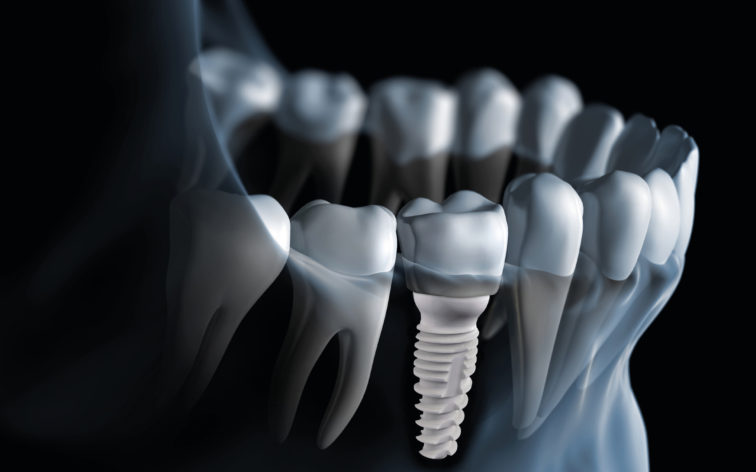
Multi-year studies from 2024 and 2025 continue to reinforce a critical truth about zirconia implants: the material alone doesn’t determine success. The newer data shows that implant geometry, macro-design, and surface treatment directly influence survival, stability, and soft-tissue behavior. This means you cannot generalize across zirconia systems. A one-piece implant designed 8 to 10 years ago does not perform the same as a modern two-piece, screw-retained system—this is not a subtle difference; it shows up clearly in survival rates and long-term bone stability.
The 2025 Journal of Prosthodontics ten-year follow-up on legacy one-piece implants reported a survival rate of around 73 percent with more pronounced marginal bone loss as time went on. These outcomes reflect the limitations of early zirconia designs: limited prosthetic flexibility, higher fracture risk at the collar, and more demanding surgical precision. Compare that to the 2025 multi-year retrospective study on two-piece zirconia implants that showed survival rates above 98 percent with minimal bone loss and stable soft-tissue parameters. That difference is not simply the "zirconia" speaking—it’s design, micro-roughened surface optimization, connection engineering, and controlled loading.
Regardless of system, the fundamentals still matter more than anything. Atraumatic osteotomy preparation, guided depth and angulation, and soft-tissue respectful insertion techniques continue to be the strongest predictors of long-term success. Conservative loading windows—especially with zirconia’s lower flexural tolerance—remain essential. Proper occlusal engineering protects the cervical region from the kind of lateral stresses that can accelerate microcracking or marginal bone loss. The literature reinforces this point repeatedly: no material can compensate for poor biomechanics or a rushed surgical workflow. If your restorative plan does not protect the cervical margin and distribute occlusal forces intelligently, the implant’s chemistry won’t save the case.
One of the most promising developments is the emergence of practice-based registries. Instead of relying only on tightly controlled clinical trials with ideal conditions, these registries capture how implants behave in the hands of many clinicians, across varied bone types, health profiles, and restorative approaches. These datasets document not only survival rates, but also real complications, prosthetic failures, peri-implant soft-tissue trends, and patient-reported outcomes. This is the type of evidence the profession has been missing for decades—evidence that separates material properties from surgical or prosthetic variables and reflects the true challenges we face in practice. As these registries expand, clinicians will gain better decision trees for case selection, clearer guidance on maintenance intervals, and more realistic expectations about how zirconia behaves under different conditions.
Soft-tissue biology around ceramics is another area gaining attention. Multiple reviews report lower inflammation indices around zirconia compared to titanium abutments, suggesting a favorable host response—particularly important in the esthetic zone. Researchers are beginning to explore cytokine profiles and biomarkers around ceramic surfaces, trying to understand why some patients show more stable mucosal seals or reduced BOP. While the biomarker-based personalization of maintenance schedules is still emerging, clinical metrics like probing depth, mucosal thickness, bleeding indices, and patient-reported comfort provide a powerful feedback loop for refining your protocols right now. The goal is no longer just osseointegration. The goal is a peri-implant environment patients can maintain long-term without inflammation or discomfort—and ceramic surfaces seem to support that when paired with disciplined hygiene workflows.
Patient satisfaction with zirconia implants remains consistently high across multiple prospective and retrospective studies. But as always, how we communicate matters. Zirconia is not the universal “better” implant. It is a highly effective option for the right patient, in the right site, with the right surgical and prosthetic protocols. That means your entire team—from surgeon to restorative doctor to hygienist—needs shared clarity on zirconia’s strengths, its limitations, its handling requirements, and the maintenance it demands. When you document outcomes honestly, review them systematically, and refine your indications based on your real-world data, you give patients what matters most: accuracy and transparency.
This is biological dentistry at its best. It treats the implant not just as a device, but as a component in a larger biological, mechanical, and behavioral system. Zirconia can absolutely be part of that system. But success comes from mastery of protocols, alignment across the care team, and a commitment to understanding how material, anatomy, and patient biology intersect. That’s the future emerging in the literature—and the direction modern implant dentistry is moving.
References
Journal of Prosthodontics: Ten-Year Results of a Prospective Study on One-Piece Zirconia Oral Implants for Single-Tooth Reconstruction (2025)
- Shows lower long-term survival for older one-piece zirconia implants and highlights bone loss and soft-tissue decline over 10 years.
- Link: https://pubmed.ncbi.nlm.nih.gov/41039731/
Clinical Oral Implants Research: Two-Piece Zirconia Implants: An Office-Based Retrospective Study with up to 7 and Mean 3-Year Follow-Up (2025)
- Demonstrates high survival rates and stable marginal bone levels for modern two-piece zirconia systems.
- Link: https://www.zeramex.com/en/dental_professionals/news/posts/2025/tartsch-et-al-2025.php
European Journal of Medical Research: Clinical Effectiveness of Zirconia Versus Titanium Dental Implants: Overview of Systematic Reviews (2025)
- Confirms wide variability in zirconia outcomes and emphasizes the need for system-specific evaluation.
- Link: https://eurjmedres.biomedcentral.com/articles/10.1186/s40001-025-02488-5
Journal of Pharmacy and Bioallied Sciences: Evaluation of Long-Term Success in Zirconia Implants: A 5-Year Prospective Comparative Study (2025)
- Shows comparable survival to titanium and reports favorable soft-tissue response around zirconia.
- Link: https://journals.lww.com/jpbs/fulltext/2025/09003/evaluation_of_long_term_success_in_zirconia.138.aspx
Journal of Ceramic Biomaterials Research: Zirconia in Dental Implantology: A Review of the Literature (2025)
- Summarizes evidence on zirconia implant survival, macrogeometry effects, and differences between one-piece and two-piece systems.
- Link: https://pmc.ncbi.nlm.nih.gov/articles/PMC12109504/
Dentistry Journal (MDPI): Primary Stability of Zirconia Dental Implants with Different Macrogeometry: A Clinical Study (2024)
- Shows that implant geometry and bone density significantly influence primary stability and long-term success.
- Link: https://www.mdpi.com/2304-6767/12/11/356
Cureus: Comparison of Peri-Implant Soft Tissue Around Zirconia and Titanium Abutments in the Aesthetic Zone: A Narrative Review (2024)
- Highlights improved soft-tissue behavior around zirconia abutments and clinical implications for esthetics.
- Link: https://www.cureus.com/articles/271599-comparison-of-peri-implant-soft-tissue-around-zirconia-and-titanium-abutments-in-the-aesthetic-zone-a-narrative-review
Journal of Oral and Maxillofacial Implants: Clinical Outcomes of Zirconia Abutments for Implant Dentistry: A Review (2025)
- Reports favorable clinical performance of zirconia abutments while noting heterogeneity and limited long-term data.
- Link: https://www.mdpi.com/2673-1592/7/5/113

Dr. Ralph K. Mensah, DDS, FICOI, AIAOMT
Dr. Ralph K. Mensah is a dedicated holistic dentist based in Chapel Hill, NC, with a passion for integrating biological principles and cutting-edge dental technology to provide comprehensive care. As the son of Ghanaian immigrants, Dr. Mensah has lived in various parts of the United States, but North Carolina has been his home for most of his life. His early focus on academic excellence laid the foundation for his successful dental career.